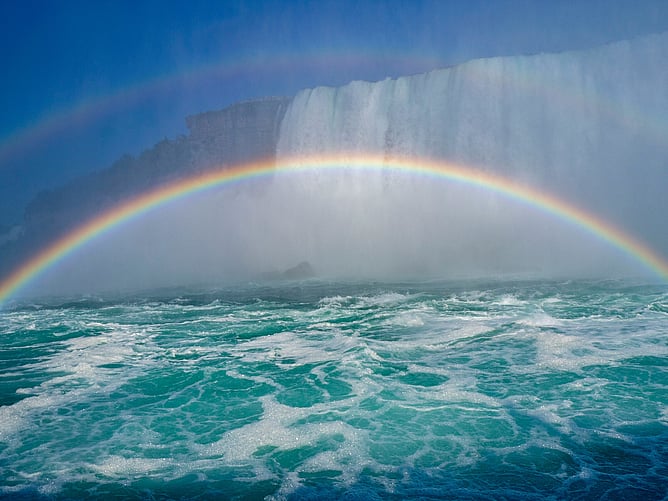
At the end of last month we re-visited a familiar Sunday School story; Noah, his family, an ark, a whole lot of animals, a flood, and a rainbow. See Genesis chapter 9, particularly from verse 12. The chapter mentions the word ‘Covenant’ several times, mainly in a discussion between God and Noah and his family. This is a very special word, repeated by God a number of times.
For the purposes of today’s article, we will assume that ‘Covenant’ means a unilateral promise, non-transactional, and probably unearned, but which is intended to be relied upon by its recipients. Indeed, Noah and his sons became vintners, a sign surely that the family were relying on this very special promise, a promise that God would never again send a flood ‘to destroy all flesh’.
This then poses a problem. In particular, what are we to make of all subsequent water-borne catastrophes, especially those that destroy crops, and wipe out humans? Has God forgotten his promise?
Surely not, but this must lead us into an uncomfortable line of thought; if God is to be relied upon, then what causes events like the Nepal/Tibet floods?
Some sincere and devout Christians say that climate change is God’s work and that God alone will set things right as he did in Genesis. Others say that there is simply nothing we can do, and that our efforts are doomed to be wasted. The theology of agency is beyond the scope of this article, but the Bible is full of agents, both heroes and villains, all of whom change the world for good or ill.
So it can be argued that passivity is insufficient; that we must face our own agency, and own up to our part in flooding. The science is still evolving, but to deny human agency altogether is to avoid the implications of the Covenant. Rainbows are a reminder not only of God’s promise but also of our need to respond.