It’s a very impressive sight with a very impressive sound. The pipe organ at St Peter’s Cathedral fills the space with sound that feels larger than its source.
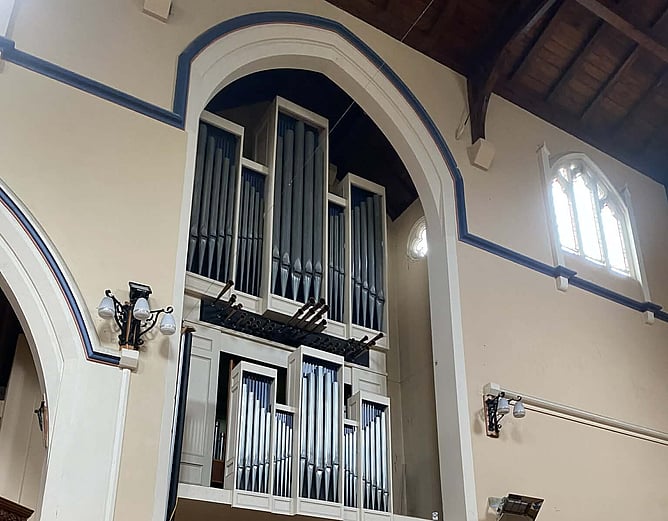
Built in 1874 in England by Messrs Bishop and Starr of London, it was originally installed in the Wesleyan Church, now known as Durham Street Methodist Church in Christchurch. In 1916, it was purchased and relocated to St Peter’s Cathedral in Hamilton.
Since then, it has been rebuilt and expanded several times to meet evolving musical needs. Today, it contains more than 1,800 pipes and includes modern playing systems such as digital piston capture and a sub-octave coupler.
On a Sunday, you will find at the console, organist Anne Cleaver-Holm, surrounded by rows of “stops”, small knobs labelled with different instrument sounds.
“It looks complicated,” she says, “but I know exactly what each one does. If I pull one, I know the sound I’ll get.”
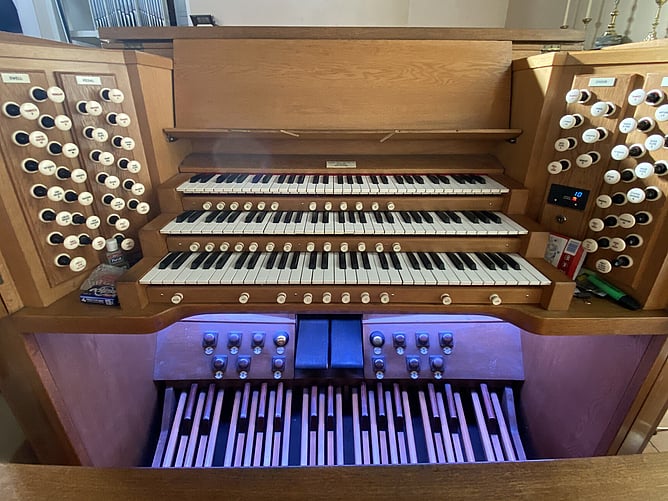
Each stop controls a different sound or instrument voice. Some are so soft they seem to disappear into the air. Others are bold enough to carry to the back of the cathedral and out the doors.
When combined, they create a layered instrument that behaves almost like an orchestra.
There are three manuals (or keyboards) and the pedals underfoot play their own part, usually used for playing the bass line.
When playing with her feet, Anne says, “You don’t look, you feel them.”
From the front, the organ façade shows only a fraction of its pipes. But hidden behind a door below is another world: the organ chamber, the engine room.
When entering the room, behind a narrow door you’ll see at the base a blower system that draws in air from outside. Up the stairs above it sit two wind reservoirs, large airtight cushions that store air under steady pressure. Weighted boards rest on top, maintaining stable wind pressure when the organ is played.
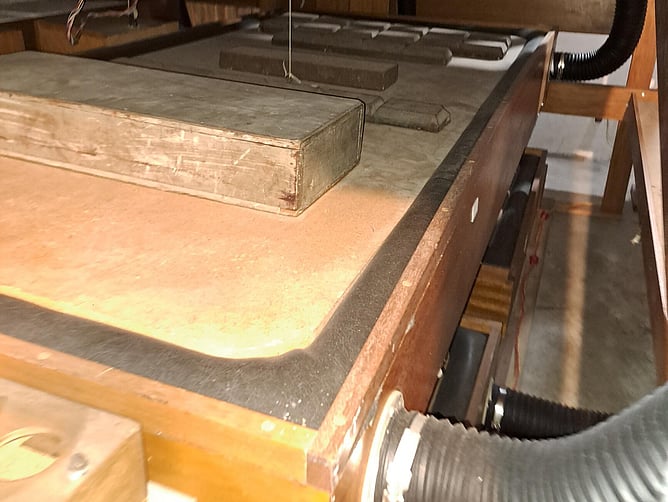
For a sound to be made, something precise and almost invisible happens.
First, when a stop is pulled, a wooden slider moves into place, aligning holes with the chosen rank (a set of pipes corresponding to each note). Each rank has its own sound colour. Then, when the key is pressed, pressure in the wind reservoir allows air flow into the pipe via a valve. There is one valve for each key.
A digital system connects the organ console to the 'engine room' on the other side of the cathedral, telling it which notes to play according to the keys pressed.
“It’s simple in principle,” Anne explained, “but the scale makes it extraordinary.”
Inside the organ chamber, the rows and rows of pipes sit precisely in order. Some are small enough to hold in your hand. Others rise to sixteen feet, forming the deep backbone of the sound heard in the cathedral.
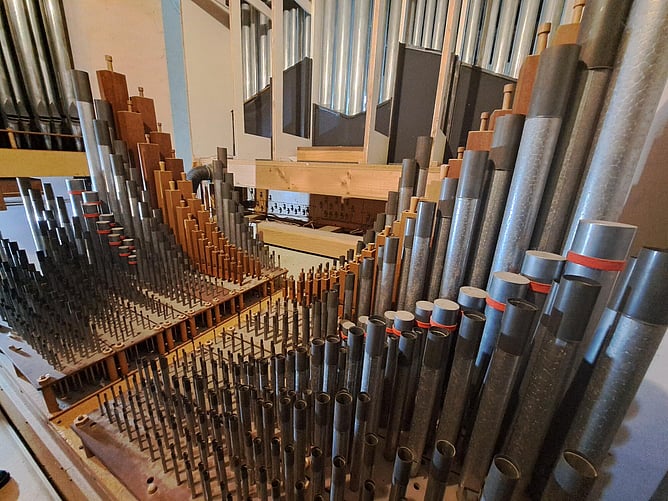
Pipes are tucked everywhere. Some are hidden behind panels, others deeper within the structure. Some are inside the swell box, an enclosed space with wooden louvres that the organist opens and closes to control volume. The largest pipes are wooden and housed at the back of the chamber.
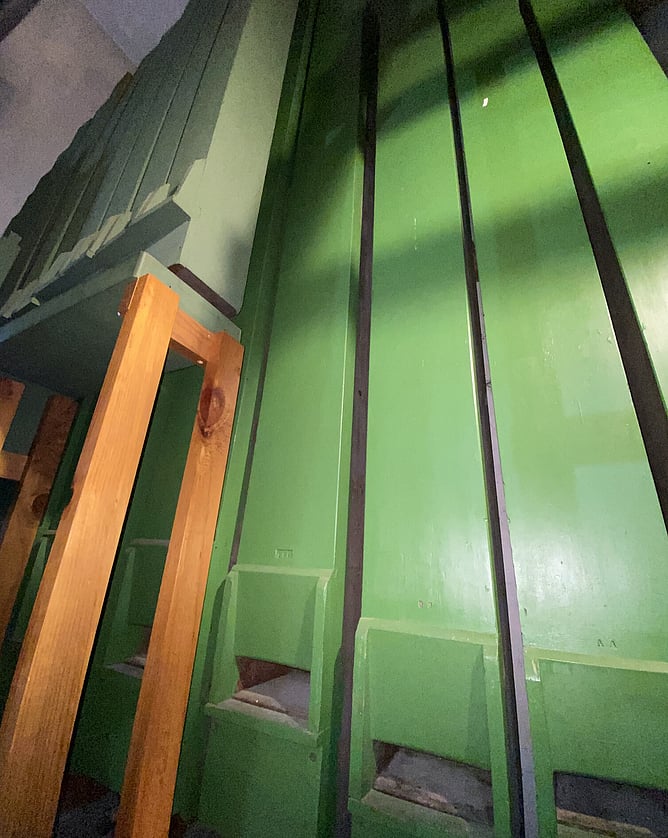
Layered together, all these pipes create the organ’s full voice.
So when you hear the organ played, you now know it is the result of all of this working together: air, mechanics, pipes, and the organist. A system built in another era, adapted over time, and still serving its purpose today.
A complex instrument, quietly (or loudly) doing what it has always done.
For more on the Cathedral's music and organs, visit our music page.
If you are interested in joining one of the choirs or becoming an organ scholar, please send us a message.
Want to hear it for yourself? There's no better way to experience it than in person. Come along to one of our services. Click here for weekly services.