“I have decided to follow Jesus, the Cross before me, the world behind me — no turning back.” That simple, memorable chorus has a way of looping in the mind. I first heard it sung by a Wellington Māori choir on an LP I bought in London, and it has stayed with me ever since.
The hymn’s origins are as striking as its tune. The melody is often described as Indian traditional, and the words are attributed to Sadhu Sundar Singh — “Sadhu” being a title meaning ascetic or holy man. Sundar was born in 1889 into a wealthy Sikh family and educated at a mission school where the Bible was read daily. As a boy he longed to become a Sadhu, and his rejection of Christianity was so fierce that he once burned a Bible in public.
Everything changed after the death of his mother when he was fourteen. Grief plunged him into despair, and he resolved to end his life by lying on the railway tracks before the 5 a.m. express. The night before, he prayed a desperate prayer: “O God, if there is a God, reveal thyself to me tonight.” Before dawn, his room filled with light and a man appeared, saying, “How long will you deny me? I died for you; I have given my life for you.” The figure’s hands were pierced. Sundar recognised Jesus — alive, present, calling him. He fell to his knees and felt a peace he had never known. The vision faded, but the peace did not. It stayed with him for the rest of his life.
He was baptised soon after.
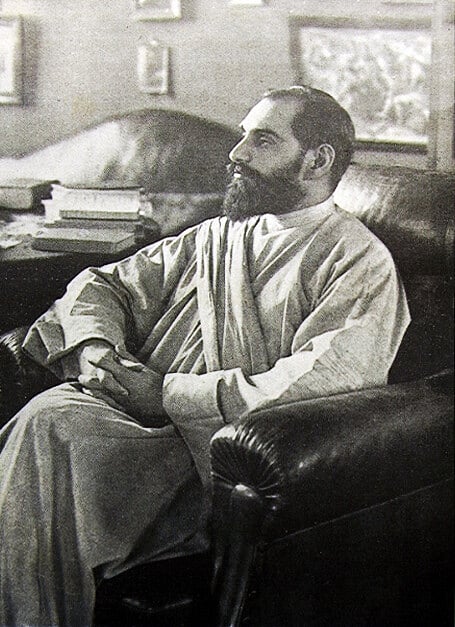
Sundar believed the gospel had often been rejected in India because it arrived clothed in Western culture. So he became a Sadhu for Christ — celibate, barefoot, owning nothing, wearing the traditional yellow robe, and living on the charity of others. In this simplicity he travelled widely, preaching a message of love, peace, and new life in Jesus. He carried no possessions except a New Testament.
His journeys eventually took him to Britain, the United States, and Australia, though his deepest calling was to Tibet. Each year he walked hundreds of miles across the Himalayas. In 1929 he set out once more and was never seen again.
The NZ Prayer Book commemorates him on 19 June — a reminder that the call to follow Jesus can take many forms, but always leads toward life.